
Anúncios
You can cut fuel costs and lower emissions with small, simple shifts in how you drive. These changes reduce wear, help you save money at the pump, and make each trip calmer and safer.
Smoother acceleration, steady speed, and routine tire checks are easy to add to your routine. They lower gas use and the total environmental impact without adding hassle.
In this guide you’ll get a clear way to apply smoother inputs, smarter trip planning, and basic maintenance. You’ll learn when to use features in your car and when to avoid them so you don’t waste fuel.
Key takeaways: practical tips that fit daily life; clear links between each habit and its emissions and fuel benefit; steps you can use today to save money and reduce impact.
Why your daily driving style matters for emissions, safety, and your wallet
How you press the pedals each day has a surprisingly large effect on fuel use, the life of your vehicle, and what you pay at the pump.
Anúncios
Research shows aggressive behavior — speeding or rapid acceleration and braking — can reduce fuel economy by 15%-30% on highways and 10%-40% in stop‑and‑go traffic (Massachusetts Institute of Technology). That translates to more gas burned, higher emissions, and bigger repair bills.
Small changes are the fastest win. Moderate acceleration and gentler braking cut wasted energy immediately. You save money now and lower long‑term costs by reducing wear on brakes, tires, and drivetrain.
“Understanding the impact of simple choices empowers you to cut consumption and protect others on the road.”
Anúncios
- Smoother pacing lowers carbon output and helps your vehicle last longer.
- Stable speeds and sensible spacing boost safety and reduce fuel use.
- Use in‑car feedback to track improvements in real time.
For practical steps, check these eco-friendly driving tips to start saving today.
Eco driving habits you can apply on every trip
Each trip gives you chances to cut fuel use and reduce wear with simple, steady inputs. Small changes in acceleration and braking lower fuel consumption and limit mechanical stress. Use gentle throttle inputs and smooth stops to keep the car responsive and comfortable.
Anticipate traffic: Look ahead, read the flow, and lift early to coast toward slowing conditions. Rolling through green lights and avoiding full stops saves fuel and brake wear.
- On dry highways, use cruise control to hold a steady speed and reduce creeping fuel use.
- Give yourself space so you can make small corrections instead of late hard braking and re-acceleration.
- Avoid aggressive starts and sudden stops — MIT research shows these habits can cut mpg by 15%–30% on highways and even more in stop-and-go traffic.
Use any onboard feedback to coach your choices; studies show feedback can improve driver fuel economy by about 6.6%. For more practical tips, see these fuel-efficient driving techniques.
Plan smarter: routes, timing, and combining trips to use less fuel
A little prep—mapping, timing, and batching tasks—can shrink miles and fuel use. Several short trips from cold starts may use up to twice as much fuel as one longer, multipurpose trip covering the same distance (U.S. Department of Energy). Plan to get the most from each outing.
Combine errands into one multipurpose trip
Batch errands into a loop so the engine reaches optimal temperature once. That reduces cold-start waste and saves fuel.
Optimize routes with reliable tools
Map an efficient route before you leave using trusted navigation tools. Avoid closures, detours, and heavy traffic that add time and burn extra gas.
Skip peak rush hours when you can
Shift departures to off‑peak windows to limit idling and stop‑and‑go. When you can’t, order stops to cut backtracking and check parking options to avoid circling.
- Choose the most efficient vehicle for the task to further reduce fuel use.
- Preview live traffic and roadwork for weekend plans to pick smoother paths.
- Reuse tested routes in your notes app to save planning time later.
“Small route and timing choices add up to real fuel and time savings.”
Maintenance moves that improve fuel efficiency and reduce emissions
Small, regular checks add up to real savings. Routine maintenance keeps your vehicle efficient and limits wear that raises fuel consumption.
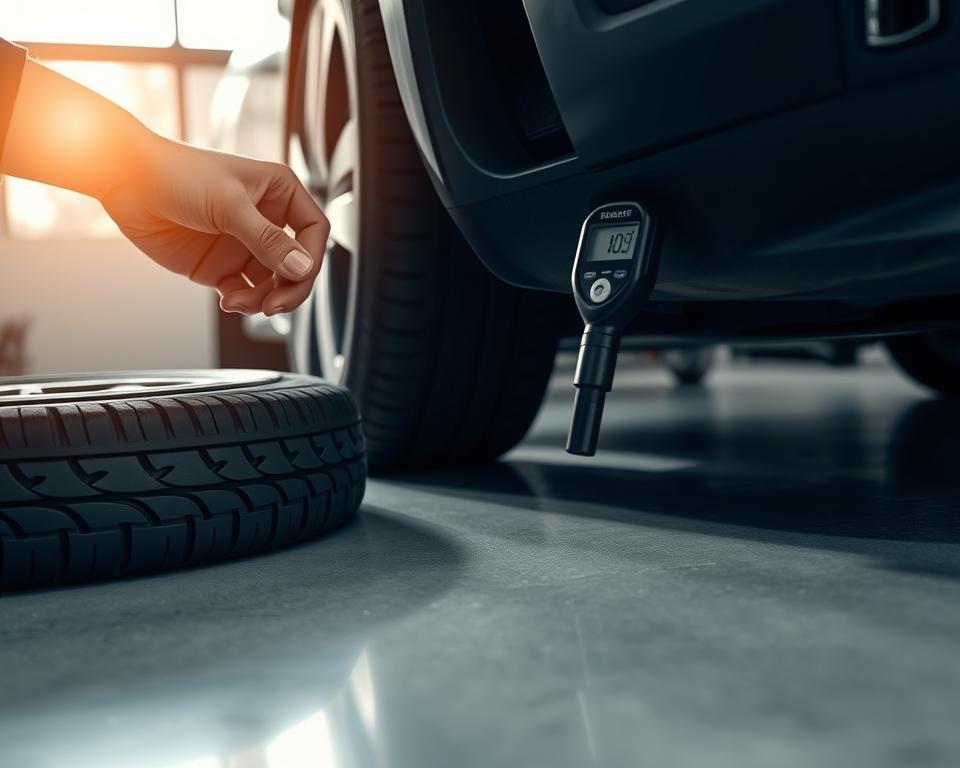
Keep tires properly inflated. Proper pressure can improve gas mileage by about 0.6% on average and up to 3% when tires are seriously underinflated. Check pressure monthly and before long drives to improve fuel efficiency and handling.
- Use the oil grade the manufacturer recommends. The right viscosity can boost mpg by 1%–2% by reducing engine friction.
- Follow scheduled service—many cars need attention every 5,000 miles or six months. Regular checks keep filters, plugs, and fluids in spec.
- Replace clogged engine air filters as advised; good airflow supports cleaner combustion and better mpg in older vehicles.
- Keep wheels aligned and rotate tires to lower rolling resistance and extend tire life, which helps control costs.
If a warning light appears, fix it right away. Problems with the engine or emissions systems can quietly increase fuel use and tailpipe output. Ask your shop to verify tire pressure and tread at each visit — it’s a quick win with measurable returns.
“Small, consistent maintenance steps protect performance and reduce what you pay at the pump.”
Cut idling time without sacrificing comfort
Cutting idle time is one of the simplest ways you can lower emissions and save money during everyday trips.
Quick fact: Research from the U.S. Department of Energy’s Argonne lab shows idling more than about 10 seconds uses more fuel and emits more CO2 than shutting the engine off and restarting.
Vehicles warm up faster when you drive gently. Skipping driveway warm‑ups cuts wasted gas and gets systems up to temperature with less overall use.
- If you expect to wait, shut the engine off after about 10 seconds; restarts are designed to be efficient and will save fuel and emissions.
- Prioritize seat and steering heaters in cold weather instead of long cabin pre‑heat; they keep you comfortable with less energy draw.
- Avoid leaving the car running during pickups or long curbside waits; brief shutoffs improve air quality and reduce waste.
- Use remote start sparingly and plan curbside stops so you don’t sit burning fuel while figuring out the door or spot.
- Let auto stop‑start work if your vehicle has it — it trims idle time without added effort.
Practical check: Track your idle time for one week. Small awareness changes add up — if every car idled six minutes a day, about three billion gallons could be wasted annually.
Master your speed and acceleration for lower fuel use
How you pick your pace on open roads controls aerodynamic losses and what your engine must work to overcome.
Know the impact of speeds above 50 mph on fuel economy
Gas mileage typically falls rapidly once you exceed about 50 mph. Aerodynamic drag rises with speed, so backing off a few miles per hour can cut fuel consumption noticeably.
Hold steady speeds and avoid rapid bursts of acceleration
Aggressive acceleration lowers economy significantly. Smooth, moderate throttle use protects traction, the motor, and your wallet.
- Aim for steady speed on open roads; frequent pace changes raise fuel consumption without saving meaningful time.
- Use gentle inputs on hills — let speed dip uphill and recover on descents to keep the engine in its efficient zone.
- Choose the lane with the most consistent flow so you can maintain a stable pace safely.
- Watch your tachometer where available; lower, steady rpm often signals better fuel consumption for your vehicle.
- Keep safe following distances — it improves safety and reduces wasteful braking and re‑acceleration.
“Practice one or two simple driving techniques at a time — small, consistent gains beat a single perfect drive.”
Use feedback, tech, and tools to improve your driving efficiency
Small tech changes and clear feedback give you immediate ways to lower fuel use. Many cars show instant fuel readouts and coaching graphics that help you refine throttle and braking. Telematics and plug‑in apps add extra insight so you can track progress over time.
Leverage in‑vehicle displays and eco modes for real‑time coaching
Turn on eco mode if your vehicle has it; it moderates torque and trims some climate loads to support efficiency with little effort from you. Watch instant readouts and simple prompts — they let you correct habits during the trip, not after it.
Try telematics or aftermarket feedback to gain measurable improvement
Studies show in‑vehicle feedback can improve fuel economy by an average of 6.6% (UC Davis Institute of Transportation Studies). Consider a plug‑in feedback device or an app that scores your inputs. Many drivers see tangible gains within weeks.
Set goals and incentives to reinforce better control
Set a simple target, like cutting harsh events by 25%, and review weekly trip histories. Use tools that suggest smoother routes and warn about congestion so you can hold steadier speeds.
- Use light cruise control on dry, flat highways to keep a steady pace.
- Compare scorecards if you share a car — friendly competition helps everyone improve.
- Reward yourself from monthly fuel savings to lock in the new behavior.
“Feedback and small tech choices turn ordinary trips into consistent savings.”
Advanced options: from EVs and hybrids to fleet‑style strategies
If you want bigger reductions, look beyond daily technique to vehicle choices and light fleet tactics.
Consider hybrids and EVs for lower operating costs and fewer emissions
If you’re shopping, consider a hybrid or electric vehicle. They cut operating and maintenance costs because they have fewer moving parts to service.
Eco modes in many electrified models trim torque and climate load to extend range and reduce energy use.
Adopt light‑duty fleet tactics: policies, speed caps, and routing
Set simple rules at home: self‑set speed caps, gentle acceleration targets, and periodic reviews of your trip data to keep control of consumption.
Delivery fleets use telematics with smart routes to avoid traffic and cut miles — a clear example you can borrow for errands and pickups.
Plan around cargo, rooftop boxes, and unnecessary weight
External load and wind drag matter. Rooftop boxes can cut fuel economy up to 25% at interstate speeds and about 8% in city use. Pack inside the vehicle, remove roof gear when idle, and carry only what you need to reduce fuel penalties.
- Choose hybrid/EV to lower long‑term costs and carbon output.
- Use simple fleet rules—speed, load, and monthly gear checks.
- Plan routes and cargo to keep trips short and smoother.
Conclusion
,Small, steady choices on the road add up to real savings for your tank and maintenance budget.
Focus on smoother inputs—lighter acceleration, earlier lifting, and gentler braking—to cut fuel consumption immediately. Keep speeds just below high‑drag ranges and use cruise control on steady highways to protect economy. Remember: aggressive behavior can lower highway mpg 15%–30% and stop‑and‑go mpg 10%–40%.
Limit idling (shut off after 10 seconds), check tires and oil regularly, and try one feedback tool to chase a 6.6% gain. Remove rooftop boxes when you can; they can shave as much as 25% from highway economy. Pick one habit, track one metric each week, and enjoy lower fuel use, fewer repairs, and more money in your pocket.